



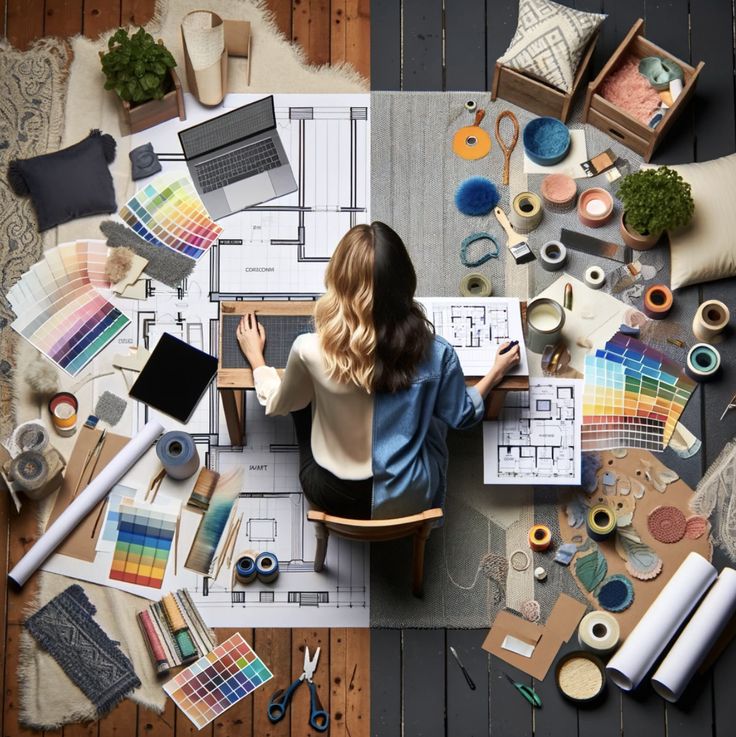
Mixing patterns and textures is a cornerstone of professional interior design, transforming a good room into a great one. While it may seem daunting, the ability to layer different prints and materials is what gives a space depth, personality, and a curated, lived-in feel.1 Interior designers master this skill by following a set of principles that create harmony and balance, rather than chaos.2 Here’s a guide to help you how Top 10 interior designers in chennai confidently mix patterns and textures in your own home.
1. Start with a Foundation: The Color Palette
Before you even think about patterns, establish a clear and cohesive color palette. This is the glue that will hold all your different elements together.
- Choose a Dominant Color: Select a primary color that will set the tone for the room.
- Add Secondary and Accent Colors: Complement your dominant color with one or two secondary colors and a single accent color for pops of visual interest.
- Vary the Tones: Use different shades and tints of your chosen colors to create subtle variations that keep the eye moving without being jarring.
- Stick to the Palette: Every pattern and texture you introduce should contain at least one color from this palette. This simple rule ensures that even the most disparate patterns feel like they belong together.
2. The Golden Rule of Patterns: Varying Scale
The most effective way to mix patterns is to use a variety of scales. This prevents competition and gives each pattern its own moment to shine.
- The Large-Scale Pattern: Start with a large-scale, dramatic print.6 This could be a bold floral on a sofa, a wide stripe on a rug, or a striking geometric on a feature wall. This pattern will be the anchor of the room.7
- The Medium-Scale Pattern: Next, introduce a medium-sized pattern. This should be different in style from your large-scale pattern. For example, if your large pattern is a floral, a medium-scale check, damask, or ikat print would work beautifully.
- The Small-Scale Pattern: Finally, add a small, intricate print. Think of a tight geometric, a polka dot, a small animal print, or a subtle pinstripe. These smaller patterns act as the “connecting tissue” of the room, adding detail without overwhelming the eye.
A simple designer formula is to use a large, a medium, and a small-scale pattern across different items in the room, such as the rug, curtains, and throw pillows.
3. Mix Up the Texture: More is More
While patterns can be a bit more restrained, when it comes to textures, more is definitely more. A room rich in texture feels luxurious and inviting.
- Combine Hard and Soft Surfaces: Pair soft materials like plush velvet, linen, and chunky knit throws with hard surfaces like a sleek marble coffee table, a glass lamp, or a polished metal accent.9
- Introduce Natural Textures: Bring in elements from nature to add warmth and authenticity.10 Woven jute rugs, a rattan armchair, a wooden side table, or a ceramic vase all introduce organic texture.
- Embrace Tactile Fabrics: Layer different fabrics to create a sensory experience.11 Consider combining the smooth, cool feel of silk with the rough, natural texture of linen or the soft, deep pile of a shag rug.
A good way to visualiz this is to think of a bed. Start with a smooth cotton duvet, add a textured knit throw at the end, and then top it with pillows in a variety of materials—a linen pillow, a velvet pillow, and a small, patterned pillow. Each layer adds a new dimension.
4. Strategically Place Your Elements
The placement of your patterns and textures is just as important as the elements themselves.
- Spread Them Out: Don’t cluster all your patterns and textures in one corner. Distribute them evenly throughout the room to create visual balance.
- Use Them to Define Spaces: Use a large patterned rug to anchor a seating area, or a textured wallpaper to create a cozy, defined nook.
- Think in Layers: Just like with textures, think about how you can layer patterns. A plain sofa can be adorned with three different patterned pillows, or a patterned rug can be topped with a solid-colored ottoman.
5. When in Doubt, Use a Neutral Base
If you’re still feeling unsure, start with a neutral, foundational palette for your furniture. A solid-colored sofa and chairs, for example, provide a clean canvas for you to experiment with patterned and textured throw pillows, blankets, and rugs. This approach is low-risk and allows you to easily swap out elements as your tastes change.
The key to mixing patterns and textures is to be confident and have fun with it. By keeping a consistent color palette, varying the scale of your patterns, and layering different textures, you can create a room that is not only visually stunning but also deeply comfortable and reflective of your unique style.12
