



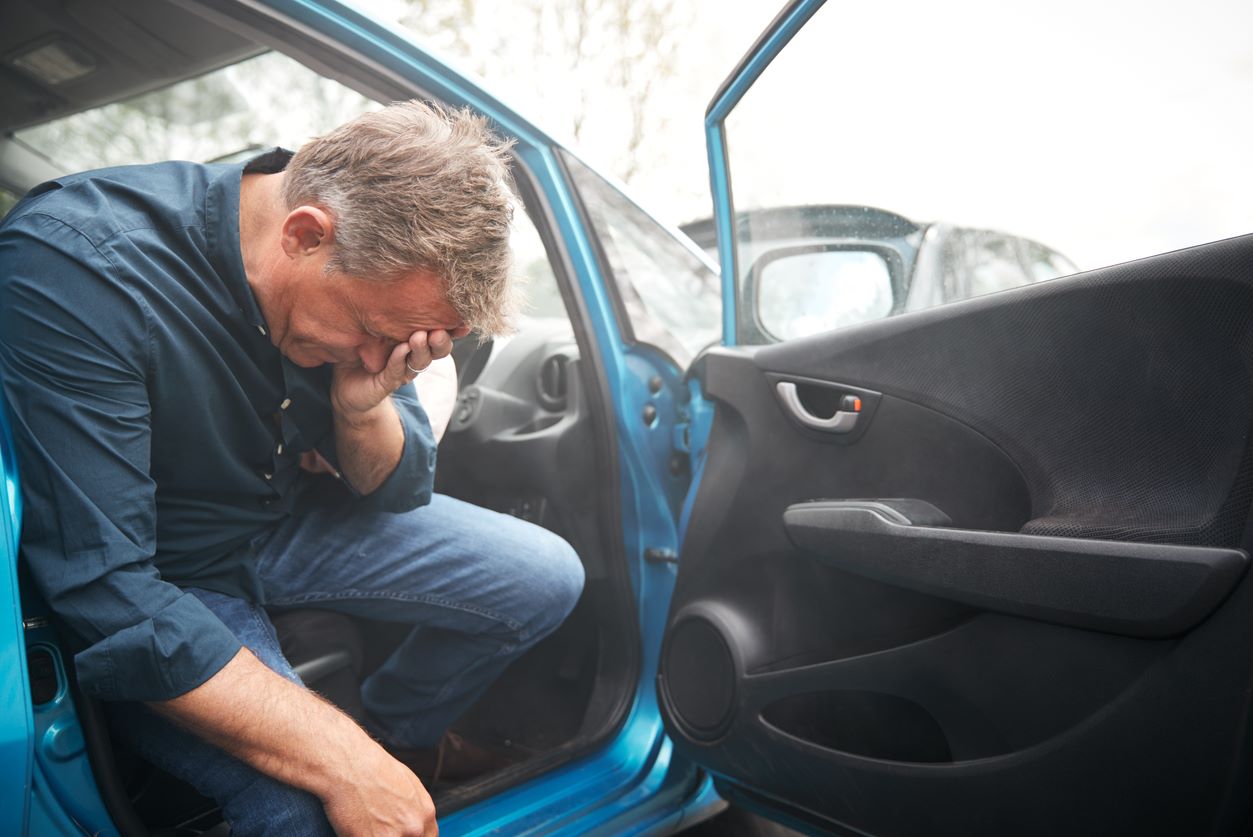
Your car is still in the road. Someone is asking if you’re okay. Your first instinct is to say sorry. And the law does nothing to make you feel better about that.
The apology problem
Apologies can have a significant impact. There is often little you can do to stop other people from making mistakes: turning in front of you, exceeding the speed limit, driving while sleepy or drunk. But you can control what you say afterward and protect yourself.
There’s a reason every insurance company worth its lobbyists wants you to be the first to report an accident: it locks in your memory’s version of events. No one benefits from a solid memory like a corporation.
Fifteen minutes of shock can distort your perceptions and taint your memory. On the stand, in a deposition, or in arbitration, someone will pepper you with questions about your state of mind at the time, demanding precise details from the moment of impact. It’s a game they will win if you come in talking.
You don’t actually know what happened
Here’s something most drivers don’t realize: When the crash happened, you don’t have enough facts to know what led to the crash.
Approximately 94% of all motor vehicle crashes involve human error, but many of those mistakes aren’t observable by either driver at the crash site. The other guy’s brakes may have failed. The other person may have been on their cell phone. A road defect or mechanical failure in your vehicle could have turned a potentially safe situation into an unmanageable one.
You are not in a position to make a fault determination at the scene. It’s crucial that you contact a Chicago car accident lawyer as soon as possible so that you have a chance to get things straight in your mind before speaking to the police or insurance. After all, you don’t know what the other driver was doing. You don’t know what speed or braking information the vehicle’s electronic data recorder has stored from the moments leading up to the impact. Admitting fault or liability before an investigation has occurred isn’t honesty. It’s guessing.
Cooperating with the police is not the same as offering opinions
There is a distinction between answering purely factual questions and volunteering opinions that cast doubt on what happened.
When the police show up, you’re supposed to be cooperative. Tell them the actualities: where you were going, what direction you were driving, and what you witnessed just before impact. This is not to be confused with adding doubt, as in “I think I might have been going over the speed limit” or “I might have been in the wrong lane” which are opinions and do not “add up” to anything. Leave that out of your statement. The police are writing down everything you say. Stick to reporting the facts you observed, not your self-doubts about what you caused.
The same approach applies when an insurance adjuster contacts you within 48 hours of the incident, often under the guise of just wanting to get a statement while everything is still fresh in your mind and you haven’t had a chance to talk with legal counsel. No, you don’t have to give one of those either until you have had a few days to think and get some advice.
How fault admissions affect your claim under comparative negligence
Most systems of fault don’t demand you be 100% without blame to get any damages, but they establish thresholds. In the case of modified comparative negligence, if you’re 51% or more responsible for an accident, you might lose the right to obtain compensation. An admittance you make at the site of the event doesn’t just change the liability of the other driver, it changes the entire burden of proof. Rather than needing to show that you acted negligently, the other side is already at an advantage because you provided that proof. Your legal representative is then in the position of trying to overcome evidence that you already provided. A lawyer can do the hard work to show that the other party is primarily to blame, but that work is harder when an early admission is already in the record.
What to actually do instead
When you’re in an accident, make sure to first check on injuries and call emergency services if needed. Then, do your best to document the scene with photos, exchange insurance information with the other driver, and do not admit or talk about fault right away.
If someone asks who caused the accident, you don’t have to answer. “I’m not sure what happened yet” is a complete, honest, and legally neutral response. It’s not evasion. It’s accurate.
The instinct to explain yourself after a crash comes from a normal place. The cost of following it, though, can be substantial. Protecting your rights doesn’t mean being hostile or uncooperative – it means recognizing that the scene of a crash is not the right place to reach conclusions, and the words you say there follow you for a long time.
