



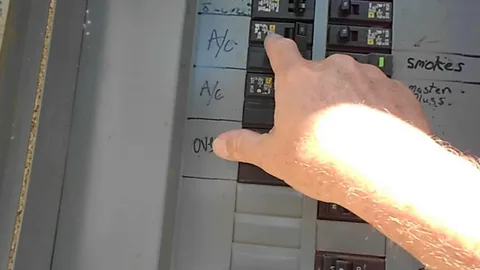
A breaker tripping once is not usually a big deal. But if it keeps happening, that is your electrical panel doing its job and trying to tell you something is not right. Breakers exist to cut power before wiring, outlets, or appliances get damaged. Ignoring repeated trips risks appliance damage, fire hazards, and escalating repair costs.
Here is what usually causes it, what you can safely check yourself, and when to call a licensed electrician providing complete Electrical Services in Waterloo, IA.
-
Why Does a Circuit Breaker Keep Tripping?
Breakers trip when current on a circuit exceeds the wiring’s rated safe capacity. It is annoying, but this interruption is the system functioning correctly.
Most household lighting and outlet circuits are rated for 15 or 20 amps, and exceeding that limit can cause the breaker to trip. Overloading is the most common cause, such as too many devices drawing power from one circuit at once. Space heaters, hair dryers, and microwaves draw significant current. Plugging multiple high-draw devices into the same circuit will trip the breaker quickly. Short circuits and ground faults are other possibilities.
These happen when electricity escapes its intended path, and they are not DIY troubleshooting items. If your home has AFCI or GFCI breakers, occasional nuisance trips can also occur because these devices are designed to detect arc faults or ground faults that standard breakers do not. Older panels and aging wiring add to the problem too, especially in homes that were never built to run today’s appliances and electronics.
-
What Can You Safely Check?
A few things are fine to check before calling anyone.
Unplug everything on the affected circuit first. Reset the breaker by switching it fully to OFF, then back to ON. Then plug your devices back in one at a time and monitor which device causes the trip.
While you are at it, keep an eye out for other red flags. These include flickering lights, a buzzing sound from an outlet, warm switch plates, or any hint of a burning smell. If you notice any of these signs, stop resetting the breaker and do not use the circuit until a licensed electrician inspects it.
-
When Should You Call a Professional?
Certain issues require professional intervention.
If the breaker trips the second you reset it, trips with nothing plugged in at all, or you are noticing odd smells, sparks, or scorch marks near the panel, get a licensed electrician out to the house. Those are usually signs of damaged wiring or a failing breaker, and they need proper testing equipment to diagnose correctly, not guesswork. A breaker that trips with nothing connected may also simply be a failed breaker that needs replacement.
A qualified technician can open up the panel, trace the actual source of the fault, and fix it in a way that holds up long-term. This is really the value of working with established providers of electrical services in Waterloo, IA: you are not just resetting a switch; you are getting the underlying issue solved.
-
How to Prevent Future Breaker Trips
Proactive maintenance prevents future disruptions.
Distribute high-amperage appliances across multiple circuits. Schedule periodic electrical inspections, especially for older homes or after recent renovations. And if your panel is undersized for how much power your household actually uses, an upgrade is often the fix that stops the trips for good.
Working with electricians who understand your home’s electrical system and provide electrical services in Waterloo, IA helps identify potential problems before they turn into something expensive, or worse, dangerous.
Final Thoughts
A breaker that trips repeatedly is not something you should overlook. It is a protective mechanism designed to prevent damage, and repeated tripping signals that an underlying electrical issue needs attention.
Either way, if tripping persists, consult a licensed professional. A trusted provider of electrical services in Waterloo, IA can track down the cause and get your power running safely again.
