



One of the most common mistakes people make when pursuing online CPR certification Canada programs offer is enrolling in the wrong certification level entirely. Canada’s CPR curriculum is organized into distinct levels, and choosing incorrectly can mean an employer rejects the certificate outright, forcing a costly and time-consuming redo. Understanding the differences between these levels before enrolling saves both time and money.
Canada’s CPR training is structured around three levels, commonly labeled A, B, and C, standardized nationally under the CSA Z1210-17 framework even though enforcement of specific requirements remains a provincial responsibility. Level A focuses strictly on adult CPR and choking response, making it the most limited in scope. This level is typically sufficient for industrial or workplace settings where the population being served is exclusively adult, but it does not cover pediatric or infant emergencies, which limits its usefulness for anyone working around children in any capacity.
Level B historically extended Level A by adding infant and child CPR content, but most major Canadian providers, including the Canadian Red Cross, have largely phased this level out in recent years. Level C has effectively become the standard replacement, covering CPR and choking response for adults, children, and infants in a single, more comprehensive certification. Because Level C covers all age groups, it has become the default requirement for the vast majority of Canadian workplaces, including healthcare settings, schools, fitness facilities, and childcare programs, since it eliminates any ambiguity about whether a certified individual is prepared to respond regardless of who needs help.
This is precisely why Level C is the safest default choice for most Canadians pursuing certification, even in situations where the exact requirement is unclear. Choosing a narrower certification, such as Level A, to save time or money can backfire if a role later requires broader coverage, since this typically means retaking an entirely new course rather than simply adding a supplemental module. Confirming the specific level required by an employer, licensing board, or regulatory body before enrolling remains the single most reliable way to avoid this outcome, but when in doubt, Level C consistently covers the widest range of workplace requirements without ever falling short.
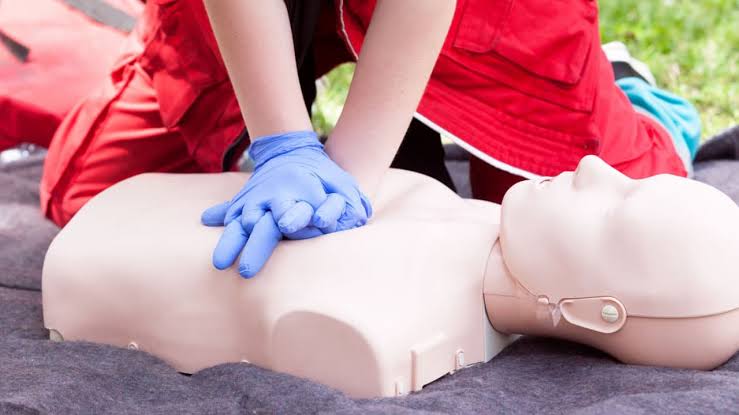
Beyond choosing the correct level, format matters just as much. Regardless of level, a fully online course without any hands-on skills verification component is not recognized for workplace compliance anywhere in Canada. Provincial regulators, including Ontario’s Workplace Safety and Insurance Board, WorkSafeBC, and Quebec’s CNESST, require documented proof that a certified individual can physically demonstrate proper compression depth, hand placement, and AED operation under the observation of a certified instructor. This means the right approach for most Canadians is a blended learning course, completing the theoretical content online at their own pace, followed by a scheduled hands-on assessment, either in person or through a supervised virtual session.
Certification validity also deserves attention once the correct level and format have been selected. Standard First Aid and CPR certification in Canada is commonly valid for three years, though confirming the exact renewal timeline with the specific issuing organization and relevant provincial regulator is worth doing, since this affects workplace scheduling and compliance planning going forward.
For healthcare professionals, childcare and education workers, fitness and wellness professionals, and parents and caregivers across Canada, selecting the right certification comes down to two decisions made correctly from the start: choosing Level C unless a narrower requirement is specifically confirmed, and ensuring the course includes proper hands-on skills verification rather than online theory alone. Getting both of these right the first time avoids wasted money and the frustration of redoing an entire course later.
Canadians looking for properly structured, provincially compliant CPR certification, built around real workplace requirements rather than confusing marketing claims, can find blended learning options across all three levels through Simple CPR, where accuracy and genuine compliance are treated as equally important as convenience.
