



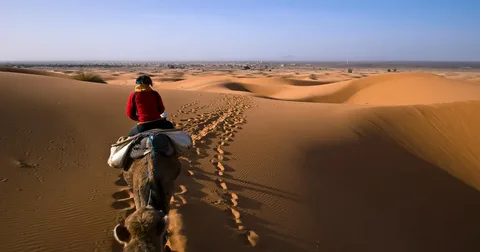
There are few travel experiences as transformative as spending a full day in the desert. Beyond the golden dunes and endless horizons lies a world shaped by resilience, tradition, and profound simplicity. When you visit nomadic families in the desert, you do not merely observe a different lifestyle—you step into a rhythm of life that has endured for centuries.
From sunrise over sand dunes to sharing tea under woven tents, a full day in the desert offers cultural immersion, natural beauty, and meaningful human connection.
Sunrise: The Desert Awakens
The desert begins its story at dawn.
As the first light touches the dunes, the landscape shifts from deep blue shadows to warm gold. The cool morning air carries a silence that feels almost sacred. This is the perfect time to begin your journey—when temperatures are mild and the desert’s beauty is at its most serene.
In regions such as the Sahara Desert, the Thar Desert, or the Wadi Rum, mornings reveal vast expanses of untouched sand stretching beyond the horizon. Camel caravans move slowly across the dunes, just as they have for generations.
Spending a full day in the desert allows you to witness its ever-changing character. The morning offers tranquility and reflection—a gentle introduction to a powerful landscape.
Morning Journey: Traveling Like the Nomads
Nomadic communities have mastered the art of desert survival. When you visit nomadic families, you quickly understand that their lifestyle is not primitive—it is highly adapted and intelligent.
Transportation often includes camels, sometimes referred to as the “ships of the desert,” prized for their endurance and ability to withstand harsh conditions. Riding a camel across rolling dunes offers a perspective that no vehicle can replicate. The slow pace encourages awareness: the crunch of sand, the vast silence, the immensity of the sky.
Nomadic groups such as the Bedouins in the Middle East or the Tuareg of North Africa maintain traditions that revolve around mobility, livestock herding, and seasonal migration.
Their tents—often made from woven goat hair or natural fibers—are carefully designed to withstand heat, wind, and occasional storms. Every object inside has a purpose. Efficiency and sustainability are not trends here; they are necessities.
Midday: Hospitality in the Heart of the Desert
By midday, the desert sun grows intense. This is when life slows down.
Visiting nomadic families during this time often means being invited into their tent for rest and refreshment. Hospitality is central to desert culture. Guests are welcomed with tea—often brewed strong and sweet—and traditional bread baked over open fire.
Meals may include rice, grilled meats, lentils, yogurt, or dates. Though ingredients are simple, the flavors are rich and nourishing. Food is shared communally, reinforcing bonds between host and guest.
Inside the tent, you notice the beauty of handcrafted carpets, cushions, and textiles. Many of these items are made by the family members themselves. Women play a significant role in weaving and domestic life, preserving skills passed down through generations.
Spending a full day in the desert gives you the rare opportunity to sit, listen, and engage in conversation. Stories of migration routes, ancestral traditions, and survival techniques offer deep insight into a way of life that urban society rarely sees.
Afternoon: Understanding Desert Survival
The desert can appear harsh, but it is far from lifeless. Nomadic families possess intricate knowledge of their environment.
They know where to find water sources, how to interpret wind patterns, and which plants have medicinal or nutritional value. Livestock—such as goats, sheep, and camels—are central to their livelihood, providing milk, meat, and wool.
Children often learn responsibility early, helping with herding and daily chores. Education, traditions, and social roles are deeply intertwined with survival.
Spending a full day in the desert reveals the balance between humans and nature. Nothing is wasted. Resources are respected. Mobility ensures that land is not overused.
This sustainable relationship with the environment is increasingly relevant in today’s world, where climate change and overconsumption threaten fragile ecosystems.
Sunset: A Spectacle of Light and Silence
As afternoon transitions into evening, the desert transforms once again.
The heat softens. The sky erupts into shades of orange, crimson, and violet. Dunes cast long, dramatic shadows. The silence becomes profound.
Watching sunset while spending a full day in the desert is not merely scenic—it is meditative. Many travelers describe a deep sense of perspective in these moments. The vast openness encourages reflection, humility, and gratitude.
Nomadic families often gather livestock, prepare evening meals, and share stories as darkness approaches.
Nightfall: Under a Blanket of Stars
After sunset, the desert reveals one of its greatest treasures—the night sky.
With minimal light pollution, constellations appear bright and endless. Around a small fire, tea may be shared once more. Traditional music or storytelling sometimes fills the quiet air.
Visiting nomadic families during a full day that extends into evening offers a glimpse into community life. Bonds between family members are strong. Oral tradition remains powerful. The pace is unhurried.
Sleeping in a desert tent or simply resting under the open sky leaves an imprint that few other travel experiences can match.
Cultural Respect and Responsible Travel
When you spend a full day in the desert and visit nomadic families, cultural sensitivity is essential.
Travelers should:
- Dress modestly according to local customs
- Ask permission before taking photographs
- Respect private spaces and traditions
- Support local guides and community-based tourism initiatives
Ethical travel ensures that nomadic communities benefit economically while preserving their cultural heritage.
Many desert regions now offer guided cultural experiences led by community members themselves, allowing visitors to learn authentically and respectfully.
Why This Experience Matters
In a world driven by speed, technology, and constant connectivity, spending a full day in the desert offers rare stillness. Visiting nomadic families provides insight into resilience, adaptability, and community-centered living.
You learn that wealth is not measured in possessions but in relationships, hospitality, and harmony with nature.
The desert teaches patience. Nomadic life teaches balance.
Together, they offer a powerful reminder that simplicity does not mean scarcity—it can mean clarity.
Conclusion
To spend a full day in the desert is to witness nature in its purest form. To visit nomadic families is to encounter living history—communities that have thrived through wisdom, cooperation, and respect for their environment.
From sunrise over golden dunes to storytelling beneath starlit skies, the experience is immersive and transformative. It expands understanding, deepens empathy, and leaves lasting memories.
For travelers seeking more than sightseeing—those yearning for authentic connection and cultural depth—the desert and its nomadic inhabitants offer a journey unlike any other.
