



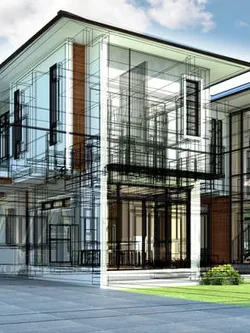
In the discourse of modern urbanism, we often define a building by its capacity: how many people it can house, how much energy it can save, or how many stories it can rise. But for the architect, there is a second, more elusive layer to design: the Atmospheric Presence. How does a space feel when the lights are low and the occupants are silent?
To find the answer, I recently looked away from the works of the great modernists and toward the delicate craft ofJapanese dolls (ตุ๊กตายางญี่ปุ่น). What I discovered was a profound overlap between the art of “Building” and the art of “Personification.”
- Structural Minimalism: The Kokeshi Lesson
If you strip architecture down to its primal elements, you get the pillar and the beam. If you strip a doll down to its primal elements, you get the Kokeshi.
Originating in Northern Japan, these limb-less wooden dolls are an exercise in extreme geometric reduction.
- The Cylinder and the Sphere: Much like the brutalist towers of the mid-20th century, the Kokeshi relies on pure form to convey strength.
- Tectonic Honesty: There is no hidden joinery; the wood is the structure, the skin, and the ornament all at once. For an architect, the Kokeshi is a reminder that when your proportions are perfect, you don’t need to hide behind decorative clutter.
- The Envelope of Silk: High-Performance Cladding
One of the most complex tasks for an architect is the “Building Envelope”—the skin that protects the interior while looking beautiful to the outside world.
Consider the Hina-matsuri dolls. Their robes are not just “clothes”; they are a sophisticated system of textile layering.
- Material Depth: Each layer of silk has a different weight and reflective quality. This is “cladding” at a micro-scale.
- Volume without Mass: The way these dolls are dressed creates a sense of grand volume, yet the core remains light. This is the ultimate goal of modern architecture: to create spaces that feel monumental and airy without being heavy or overbearing.
- The “Tokonoma” Effect: Curating the Architectural Void
In a 1,200-square-meter minimalist villa, the greatest enemy is the “Dead Corner.” These are spaces that feel empty rather than open.
This is where the Japanese doll serves as a vital architectural tool.
- The Focal Point: In traditional Japanese homes, the Tokonoma (an alcove) was designed specifically to hold one object of beauty.
- Anchoring the Ma: By placing a doll in a modern “void,” you transform the empty space into a “sacred” one. The doll becomes the “silent resident” that guards the room, giving the architecture a human heartbeat.
- Gofun and the Physics of Light
Architecture is the play of light on surfaces. While we often use glass to let light in, we struggle with how that light “lands” on our walls.
The face of a Japanese doll is finished with Gofun (crushed oyster shells).
- Soft Diffusion: Unlike modern high-gloss paint, Gofun absorbs light and scatters it in a way that eliminates harsh shadows.
- The “Luminous Wall”: As an architect, I study these dolls to understand how to create “soft” surfaces. Imagine a room finished with the same matte-glow as a doll’s cheek—the entire space would feel as if it were breathing.
- Designing for the “Long Now”
We live in a “Disposable Age,” where buildings are often demolished after only 40 years. Japanese dolls represent the opposite: Generational Permanence.
- Heirloom Assets: These dolls are not “products”; they are “descendants.” They are repaired, repainted, and protected.
- The Architect’s Manifesto: We should be designing buildings that people want to save. By infusing our structures with the same level of hand-crafted intentionality found in Japanese dolls, we move from “Construction” to “Creation.”
Conclusion: The Soul in the Blueprint
We can calculate the wind load of a tower and the thermal gain of a window, but we cannot calculate the “spirit” of a home. That must be designed by hand.
The Japanese doll reminds the architect that our work is ultimately about the human experience. Whether we are building at a scale of 1:1 or 1:100, the principles remain the same:
- Respect the Structure.
- Honor the Material.
- Protect the Spirit.
Next time you draft a plan, think of the “Silent Resident.” Leave a space for the doll, and you might just find that you’ve finally built a home.
