


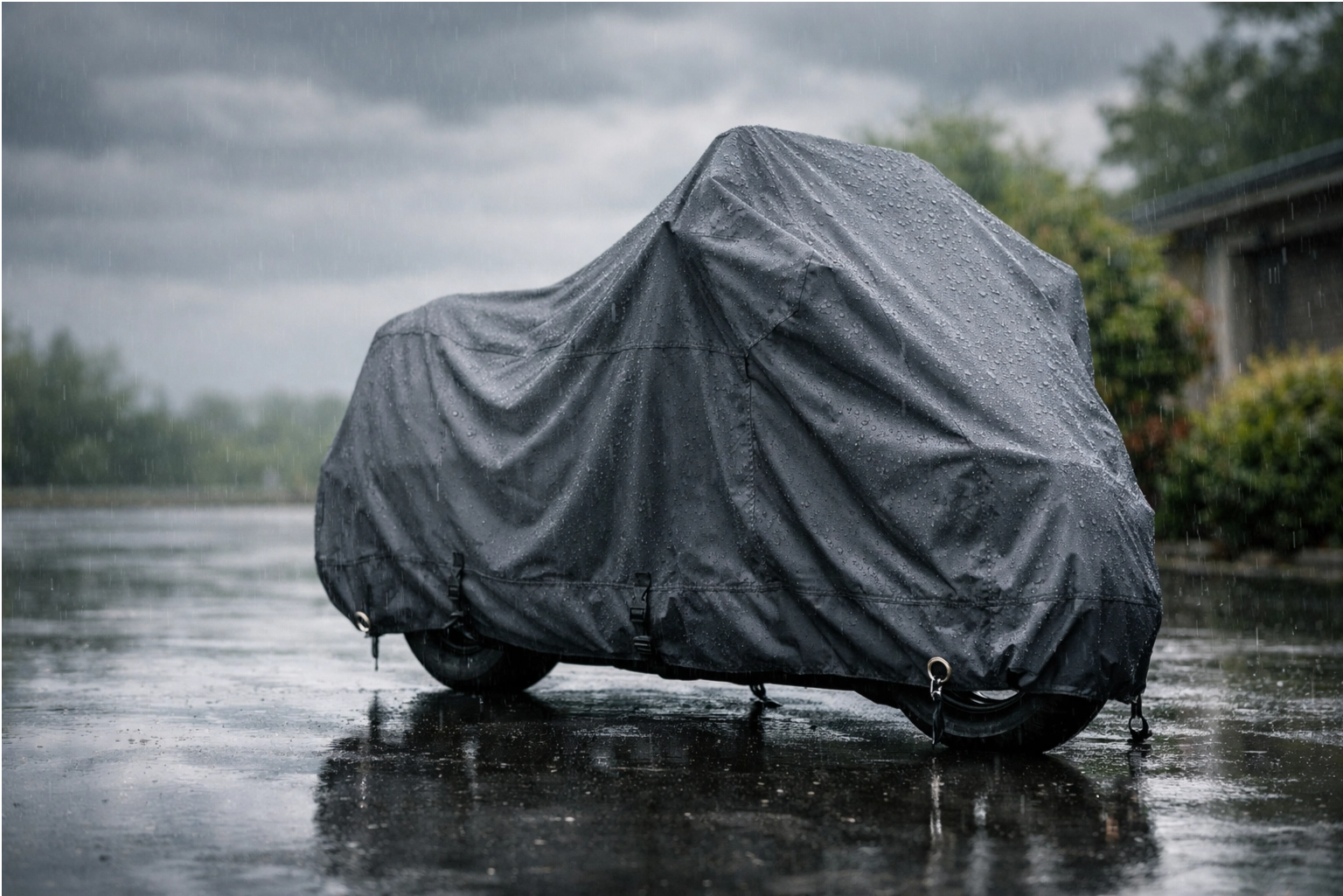
Any serious motorcycle enthusiast knows there is much more to protecting your investment than washing it now and then and doing regular checkups. Whether you are a mature touring rider or someone who uses a bike to commute daily, learning how to protect your motorcycle from the elements and choosing the right equipment for specific conditions can make a huge difference. It can be the difference between years of smooth, reliable riding and expensive repairs.
Why All-Weather Motorcycle Covers Matter More Than You Think
I learned this lesson the hard way shortly after buying my first motorcycle during winter.
Within three months of riding my touring bike through rainy and dry weather, rust started showing up on important parts, and the battery could barely hold a charge. That experience taught me something clearly: all-weather motorcycle covers are not just an accessory. They are a real protective tool for your machine.
All-weather bike covers are built to protect your motorcycle from rain, snow, UV rays, dust, and harsh weather conditions. True all-weather protection usually involves multiple layers, unlike basic covers that only survive light rain.
The best covers include:
- Waterproof outer shells
- Breathable inner linings that reduce moisture buildup
- Protection from outside debris and sunlight
That breathable design is critical because trapped condensation can sometimes cause more damage than rain itself.
Choosing the Right Size and Fit for Touring Motorcycles
Fit matters a lot, especially if you ride a heavy touring motorcycle.
Touring bikes often have saddlebags, windshields, and top cases, so they need a cover that fits over everything properly without leaving exposed areas. A well-fitted cover should:
- Cover the entire motorcycle without gaps
- Stay secure in stormy winds using tie-downs
- Include reinforced grommets for stronger fastening
It should also be slightly loose, not tight, so it covers properly and allows airflow.
Understanding Tires That Are Right for Heavy Touring Motorcycles
Protecting your motorcycle while parked is important, but protection does not end there. Your tires matter just as much, because the correct tires are the key to comfort, control, and safety in all weather.
Heavy touring motorcycles can weigh more than 800 pounds when loaded with gear and a passenger. That kind of weight requires tires designed specifically for touring.
Touring motorcycles handle very differently compared to sport bikes or cruisers. Over years of riding different roads and weather conditions, one thing becomes obvious: touring tires must balance multiple needs, including:
- High load capacity
- Long tread life
- Strong wet-weather grip
- Smooth and comfortable handling
What Makes Touring Tires Different
High-quality touring tires use advanced rubber compounds that stay flexible across a wide temperature range. This matters when your ride includes hot highway miles and cold mountain rain in the same day.
Good touring tires usually include:
- Deeper tread grooves
- More siping for water grip
- Better water evacuation compared to sport tires
This helps increase traction in wet riding and improves stability during long touring days.
Matching Your Equipment to Your Riding Style
The connection between protective covers and touring tires might not seem obvious at first, but both reflect the same mindset: year-round motorcycle ownership.
When a rider invests in an all-weather motorcycle cover, it often means they plan to ride or store the bike in changing conditions. That makes it even more important to choose touring tires that can handle whatever the weather throws at them.
Many modern touring tires use multi-compound construction:
- Harder rubber in the center for long life
- Softer rubber on the shoulders for better grip while turning
This design can provide 10,000 to 11,000 miles of tire life or more, depending on riding style and load weight.
When you are carrying luggage, camping gear, and a passenger, the confidence of knowing your tires can handle the load is priceless.
Seasonal Steps for Maximum Protection
An all-weather motorcycle cover is not just something you throw over your bike. When paired with the right preparation, it can protect your motorcycle during long winter storage and prevent major damage.
Before storing your bike for an extended period, make sure you:
- Fill the fuel tank to reduce condensation
- Disconnect the battery or connect a maintenance charger
- Use a stand to help prevent tire flat spots
Some riders believe they do not need premium touring tires because they only ride in good weather. But even summer brings surprise rain, morning dampness, and sudden temperature shifts.
All-season touring tires help ensure that if weather changes during a trip, you are not caught unprepared.
Investment Value and Long-Term Savings
All-weather motorcycle covers typically cost between $80 and $200. A set of quality touring tires can cost between $400 and $600.
At first, that might feel expensive, but it is small compared to the cost of:
- Repairing rusted electrical systems
- Repainting weather-damaged surfaces
- Replacing corroded parts
- Medical bills caused by tire failure
In my experience, my current motorcycle cover has saved me at least $3,000 in potential damage over five years of outdoor storage. In the same way, investing in proper touring tires has removed the stress of riding in unpredictable weather, while also stretching replacement intervals due to stronger construction.
Final Thoughts
Stephen King talks about how a writer must safeguard their passion for the long road ahead. Motorcycling is no different.
A motorcycle is not just transportation. It is freedom, adventure, and connection to the road.
Protecting that passion starts with smart choices. High-quality all-season motorcycle covers protect your investment during downtime. Touring tires designed for heavy motorcycles give you the confidence to ride through changing conditions without fear.
With the right setup, your motorcycle will always be ready for planned trips or sudden, unforgettable rides when the open road calls.
FAQs About Motorcycle Covers and Touring Tires
When should touring motorcycle tires be replaced?
Touring tire replacement depends more on wear and age than mileage alone.
Even if tread depth looks fine, tires older than five years should be inspected carefully or replaced because rubber compounds break down over time, even when the tires are not being used.
Do you need different tires for different seasons?
Some riders prefer winter or summer-specific tires, but modern all-season touring tires perform very well in most normal touring conditions.
The main exception is riding in snow or ice. In that situation, special equipment is required to keep riding safe.
