



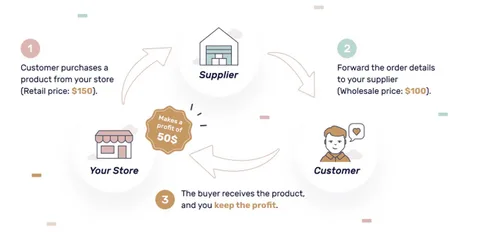
Search for an eBay listing tool and most of what you find is built for resellers who already hold the goods: a closet of thrifted clothes, a shelf of flipped electronics, a garage of returns. If you’re dropshipping from Amazon or AliExpress, you’re listing items you don’t physically have, from a supplier whose price and stock can change after you publish. A tool designed for the first situation can look like a fit while leaving the second one largely unaddressed.
This article takes a decision-first approach. Rather than ranking products, it asks you to settle one question before you compare anything: do you own the stock, or does a supplier? Your answer determines which category of tool deserves your attention, and price and features come after that.
What These Tools Actually Assume About Your Stock
Cross listing software lets you create a listing once, publish it to several marketplaces, and keep those copies in step, so an item that sells on one site comes down everywhere else. (That description comes from a page published by Ecomli, which makes a competing kind of tool, so treat it as a vendor’s framing.) The classic user is a reseller who photographs a thrifted jacket once and wants it in front of buyers on eBay, Poshmark, Mercari and Depop without retyping everything. You’ll also see the category called cross-posting software, a multi-platform listing tool or online listing software. The job is the same: listing on multiple platforms from one dashboard.
Look at what that workflow takes for granted. The jacket is a single physical item, and it’s in your hands. You photograph it, you describe its condition, and you know it exists. The sync feature matters because one jacket can’t be sold twice.
Those assumptions are built into the category. They describe a seller whose main problem is spreading owned inventory across channels, not one whose stock sits with a supplier. That difference is where dropshippers start running into trouble.
Where Supplier-Sourced Selling Breaks the Model
When your stock sits with a supplier, the problem changes shape. A cross-listing tool asks, “Where else should this item appear, and how do I pull it down when it sells?” A dropshipper has to ask three different questions.
What happens when the supplier’s price changes? Your eBay price was set against a supplier cost. If that cost moves and your listing doesn’t, your margin moves with it.
What happens when the supplier’s stock changes? You never see the shelf. If the item sells out upstream, your listing can stay live for a product you can’t deliver.
Who places the order? A sale on eBay is only half the transaction. Someone still has to buy from the supplier and send it to your customer.
None of these needs appears in the cross-listing definition from earlier, which is about publishing and syncing your own copies across marketplaces. They belong to a different workflow.
One example is Ecomli. By its own description, it is eBay-only, turns Amazon and AliExpress products into eBay listings, keeps price and stock in line with the supplier, and places supplier orders within your buying limits. It also says plainly that it is not cross-listing software. That description comes from the comparison article cited here, which Ecomli publishes, so treat it as the vendor’s account rather than an independent verdict.
A Five-Question Self-Check Before You Pay for Anything
Work through these in order. Each answer narrows the category before price comes into it.
- Do you own the stock? Items on your shelf make you a resale seller. Items a supplier holds until a customer buys make you a dropshipper, and you need supplier-sourced tooling.
- Which channels do you sell on? Several marketplaces point toward multi-channel publishing. If you only sell on eBay, that reach adds nothing.
- What’s your volume? At higher volumes, listing caps and plan limits start to matter. Check them directly, because they vary by plan.
- Where does your manual time go? If you’re re-checking supplier prices, watching for stock-outs, and placing orders by hand, you need supplier sync and order handling. If you’re re-entering photos and descriptions on each site, that’s a cross-listing problem.
- What’s your budget? Use it as a tiebreaker inside the right category, not as the first filter. A cheap tool built for the wrong model still costs you time.
Now read the result. If you answered yes to owning stock and selling on several channels, cross listing apps are worth shortlisting. If your stock sits with a supplier and eBay is your only channel, look for an eBay-focused tool that handles supplier price and stock changes and order placement. Mixed answers mean you’ll need to weigh both categories against how you actually work.
When Cross-Listing Still Makes Sense for a Dropshipper
Cross-listing isn’t off the table just because you dropship. Picture an illustrative seller who sources most items from Amazon and AliExpress but also buys thrifted pieces to sell on eBay, Poshmark, and Mercari. The supplier-sourced listings need price and stock tracking, while the thrifted items are owned stock that a cross-lister handles well. In that hybrid case, you may need one tool per inventory type rather than one tool stretched across both.
If owned stock is a meaningful part of your business, compare options on channel reach and cost. The comparison we drew on lists starting prices of $14.99/month for Vendoo, $29/month for List Perfectly, $29.99/month for Crosslist, and a free first 100 days for Flyp, then $9/month. Flat, predictable plans suit sellers who want stable costs, while tiers elsewhere differ in listing allowances and features such as automatic delisting. Treat these figures cautiously: they’re labeled as of Sep 2026, plan limits vary, and you should confirm current terms with each vendor. Sellers focused mainly on eBay may want a Vendoo alternative that fits their channel mix and workflow.
One disclosure: that comparison is published by Ecomli, which makes one of the tools it covers, so check any claim that matters to your decision against the vendors’ own pages.
Conclusion
The right tool starts with a simple question: do you hold the stock, or does a supplier? Cross-listing software is built for the first case, while supplier-sourced selling needs tooling that tracks what your supplier does. Settle that before you compare prices or feature lists. Then run a free trial or short test with a few real listings before committing to a plan. Check current pricing and eBay’s policies yourself, since both change, and let your inventory model guide the rest.
