



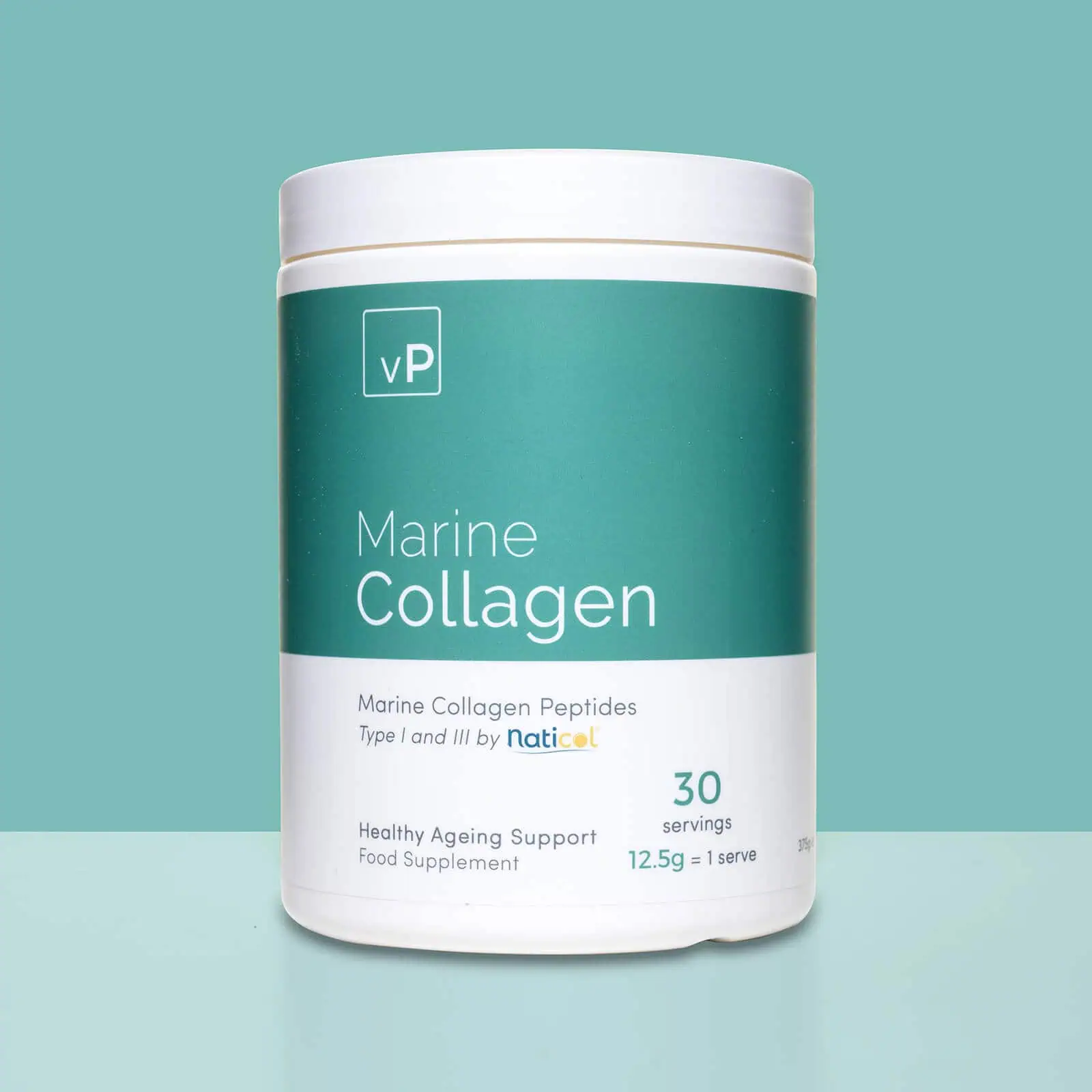
The marine collagen market has expanded dramatically over the past decade — driven by compelling clinical evidence for collagen’s role in joint health, skin elasticity, bone density, and immune function, and by a growing consumer preference for marine-sourced collagen over bovine alternatives among health-conscious women and wellness-focused adults who prioritize both efficacy and ingredient provenance. What the marketing conversation around marine collagen has not kept pace with is the contamination reality that sourcing fish from the world’s increasingly polluted oceans introduces into every collagen product that does not rigorously test for it. Marine collagen without heavy metals is not a marketing distinction — it is a fundamental quality threshold that separates collagen supplements that support health from those that introduce measurable toxic burden alongside the benefits they claim to deliver.
For health-conscious consumers who have invested in marine collagen as a long-term wellness supplement, understanding the heavy metal contamination risk and how to evaluate which products genuinely address it is among the most important purchasing decisions in their supplement regimen.
The Heavy Metal Contamination Reality in Marine Collagen
Marine collagen is derived from fish skin, scales, and bones — typically from wild-caught species including cod, tilapia, snapper, and salmon. The fish tissue that collagen is extracted from concentrates the environmental contaminants present in the water column and food chain of the marine environment those fish inhabited — a biological process called bioaccumulation that affects every marine organism and that intensifies up the food chain through biomagnification.
The heavy metals of primary concern in marine collagen are lead, mercury, arsenic, and cadmium — each of which accumulates in fish tissue at levels that reflect the contamination profile of the specific marine environment and the position of the fish species in the food chain. Wild-caught fish from heavily industrialized coastal regions, polluted river estuaries, and high-traffic shipping lanes accumulate heavy metals at significantly higher rates than fish from cleaner, more remote marine environments — and the collagen extracted from contaminated fish carries that contamination into the finished supplement.
The health implications of chronic heavy metal exposure through daily supplement use are well-established and serious. Lead exposure at sustained low levels affects neurological function, cardiovascular health, and bone metabolism — the same skeletal system that collagen supplementation is frequently taken to support. Mercury accumulation impairs neurological function and is particularly concerning for women of reproductive age and older adults whose detoxification capacity declines with age. Arsenic at chronic low-level exposure increases cancer risk and disrupts metabolic function. Cadmium accumulates in the kidneys and causes progressive renal damage that manifests only after years of sustained exposure — a delayed consequence that makes it particularly insidious in a supplement taken daily over a long period.
A marine collagen supplement consumed daily for years — a reasonable usage pattern for the joint, skin, and bone health benefits that collagen supplementation is taken to achieve — represents a significant cumulative heavy metal exposure pathway if the product has not been rigorously tested and confirmed to meet safe limits. The frequency and duration of use that makes collagen supplementation effective is precisely what makes heavy metal contamination in collagen products a serious health concern rather than a theoretical risk.
Why Most Marine Collagen Products Do Not Adequately Address Heavy Metal Risk
The supplement industry in most markets operates under a regulatory framework that does not mandate heavy metal testing as a condition of market access — manufacturers are responsible for their own quality assurance, and the standards they apply vary from rigorous third-party testing programs to no systematic testing at all. The result is a market where heavy metal contamination levels across marine collagen products vary significantly — and where the absence of testing disclosure on a product label provides no assurance that testing has been conducted rather than simply not communicated.
Several factors contribute to the inadequacy of heavy metal risk management across the marine collagen market:
Sourcing opacity. Many marine collagen manufacturers do not disclose the specific fish species, geographic sourcing region, or aquaculture versus wild-caught status of the fish used in their products — information that directly determines the baseline heavy metal exposure risk of the raw material before any testing or quality control is applied. Sourcing opacity prevents meaningful consumer evaluation of contamination risk from the ingredient information available on most product labels.
Testing methodology variability. Heavy metal testing is not a single standardized process — it encompasses multiple analytical methods with different detection limits, different panels of metals tested, and different reference standards against which results are evaluated. A product that claims to have been heavy metal tested may have been tested using a methodology with detection limits too high to identify the low-level contamination that chronic daily exposure makes clinically significant — producing a passing result that does not reflect the product’s actual safety profile at the consumption levels and durations typical of collagen supplementation.
Third-party verification gaps. Self-reported testing — where the manufacturer conducts or commissions testing and reports results without independent verification — provides significantly weaker quality assurance than third-party certification programs that require independent laboratory testing, results disclosure, and ongoing audit of manufacturing practices. The distinction between self-reported and independently verified heavy metal testing is rarely visible on product packaging but is material to the reliability of the safety claim being made.
What Rigorous Heavy Metal Testing Actually Looks Like
For consumers evaluating marine collagen products on heavy metal safety, understanding what rigorous testing involves — beyond the general claim of having been tested — provides the framework for distinguishing products that genuinely address contamination risk from those that use testing language as a marketing signal without the substance to back it:
Comprehensive metal panel testing. Rigorous heavy metal testing covers the full panel of metals relevant to marine contamination — lead, mercury, arsenic, cadmium, and where relevant based on sourcing geography, additional metals including chromium and nickel. Products tested only for a subset of relevant metals provide incomplete contamination assurance — a product that passes lead testing but has not been tested for inorganic arsenic has not been cleared of marine contamination risk.
ICP-MS analytical methodology. Inductively Coupled Plasma Mass Spectrometry is the analytical gold standard for heavy metal testing in supplements — capable of detecting metal concentrations at parts per billion levels that other analytical methods cannot reliably measure. Products tested using ICP-MS methodology provide detection sensitivity appropriate for the low-level contamination that chronic daily supplement use makes clinically relevant.
Reference standard compliance. Testing results are only meaningful relative to the reference standard against which they are evaluated — and reference standards for heavy metals in supplements vary across regulatory jurisdictions and third-party certification programs. California Proposition 65 limits provide one commonly referenced standard; USP, NSF, and Prop 65 combined compliance provides a more comprehensive safety benchmark. Products that disclose the specific reference standard their testing results are evaluated against provide more meaningful safety assurance than those that claim compliance without specifying the standard.
Independent laboratory verification. Testing conducted by accredited independent laboratories — ISO 17025 accredited facilities whose analytical methods and results are subject to external quality assurance — provides stronger safety assurance than in-house or manufacturer-affiliated testing. Independent laboratory accreditation confirms that the testing methodology meets recognized analytical standards rather than simply the manufacturer’s own quality criteria.
Batch-level testing disclosure. Single-point testing of a product formulation provides a baseline contamination assessment that does not account for the variability in heavy metal levels that different fish sourcing batches introduce. Batch-level testing — where each production lot is independently tested before release — provides the ongoing contamination monitoring that daily consumption over years of supplementation requires.
Evaluating Marine Collagen Products on Heavy Metal Safety
For health-conscious consumers navigating the marine collagen market with heavy metal safety as a primary evaluation criterion, a practical assessment framework:
Look for specific testing disclosure rather than general claims. A product label or website that states “third-party tested for heavy metals” without disclosing the testing laboratory, the metals tested, the analytical methodology, and the reference standard against which results were evaluated is making a claim that cannot be independently verified. Seek products whose manufacturers disclose testing specifics — laboratory name, accreditation status, metals panel, methodology, and compliance standard — that allow the claim to be assessed against the information provided.
Prioritize sourcing transparency. Marine collagen sourced from cold, clean, remote marine environments — North Atlantic cod, Norwegian salmon, and similar species from low-contamination geographic origins — presents a lower baseline heavy metal risk than collagen from fish sourced in heavily industrialized or polluted marine regions. Manufacturers who disclose species and sourcing geography provide the information needed to evaluate baseline contamination risk independent of testing claims.
Evaluate the manufacturer’s overall quality commitment. Heavy metal testing does not exist in isolation from a manufacturer’s broader quality assurance program — a brand that invests in rigorous third-party heavy metal testing typically also invests in cGMP manufacturing standards, third-party potency verification, and the ingredient sourcing standards that reduce contamination risk at the sourcing stage. A brand whose quality commitment is visible across multiple dimensions of product quality provides more reliable heavy metal safety assurance than one whose testing claim stands alone without complementary quality evidence.
Consider the cumulative exposure context. Marine collagen is frequently one of several supplements in a health-conscious consumer’s daily regimen — fish oil, spirulina, chlorella, and other marine-derived supplements each carry their own heavy metal exposure profile. Evaluating marine collagen heavy metal safety in the context of total daily supplement-derived heavy metal exposure — rather than in isolation — provides the most complete picture of the contamination risk that supplement selection decisions collectively determine.
Purity Is Not Optional in a Daily Supplement
A marine collagen supplement taken daily for years delivers its benefits — and its contaminants — in a compounding relationship that makes purity at the outset as important as efficacy. The joint support, skin health, and bone density benefits that make marine collagen a worthwhile long-term supplement investment are undermined rather than complemented by chronic heavy metal exposure that accumulates alongside those benefits in products that have not been rigorously tested and confirmed clean.
For health-conscious women, wellness-focused professionals, and older adults whose collagen supplementation is a genuine long-term health investment, the standard for heavy metal safety should be equally high — and the products that meet it deserve to be distinguished from those that do not.
BioOptimal Supplements has built its marine collagen products around the rigorous heavy metal testing, sourcing transparency, and third-party quality verification that long-term daily supplementation requires — providing the purity assurance that health-conscious consumers deserve from every supplement they commit to taking every day. Explore the full range of premium superfood supplements and invest in collagen purity you can verify.
