



If you have sloped land on your property, chances are you’ve thought about retaining walls at least once, and if you haven’t, you probably will after the first heavy rainstorm sends a layer of topsoil sliding where it doesn’t belong. Properly done retaining wall construction solves real problems: it stops erosion, creates level usable space from a hillside, directs water away from foundations, and adds serious visual structure to a landscape that might otherwise feel unorganized. The difference between a wall that lasts twenty years and one that starts leaning after two seasons comes down entirely to how well it was planned and built from the beginning.
Foundation depth is the single most important factor in retaining wall longevity, and it’s also the step most often skimped on in budget installations. A wall that sits on a shallow base without proper footing will shift as the ground freezes, thaws, and settles over time, and that movement shows up fast as leaning, cracking, or outright collapse. The general rule is that roughly one-eighth of the wall’s total height should be buried below grade as a footing, plus an additional three inches of compacted gravel beneath that for drainage. For taller walls, those requirements become more involved, often requiring engineered footings, reinforcing grid, and permits before any work begins.
Drainage is the part of retaining wall construction that homeowners see the least of but that matters the most over time. Water that builds up behind a retaining wall creates enormous pressure — a four-foot wall retaining a 15-foot run of soil can face up to 20 tons of pressure when that soil is saturated after heavy rain, according to information published by Bob Vila’s retaining wall construction guide. Proper drainage behind the wall — typically a layer of gravel backfill combined with perforated drain pipe that diverts water away from the base — relieves that pressure before it becomes destructive. Without it, even the most well-built wall faces an uphill battle against hydrostatic pressure that accumulates every single rainy season.
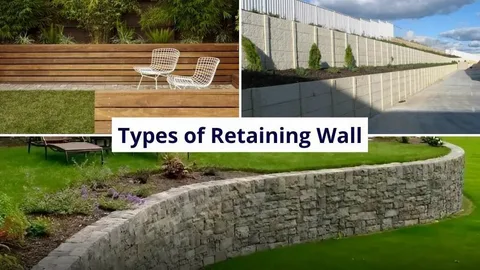
Material choice shapes both the practical performance and visual character of the finished wall. Natural stone walls have a timeless quality that suits rural and naturalistic landscapes especially well, while concrete block systems offer precise, modular construction that works cleanly in more contemporary settings. Timber walls are accessible for DIY projects up to about four feet tall but have a shorter lifespan than masonry alternatives and require proper anchoring with buried tiebacks called dead men to resist the outward soil pressure. For walls over four feet tall regardless of material, professional engineering is strongly recommended and in many jurisdictions, legally required because the structural forces involved scale up significantly with every additional foot of height.
Batter, which is the slight backward lean of the wall into the hillside rather than straight vertical, is a detail that makes a meaningful difference in long-term stability. A wall built with even one inch of backward lean per foot of height resists the soil pressure pushing against it far more effectively than a perfectly vertical wall, because the geometry directs the load downward into the footing rather than outward at the face. This is standard practice among experienced contractors and something worth asking about specifically when reviewing construction plans with whoever you hire for the job.
Permits and soil assessment often catch homeowners off guard, but they exist for good reason. Many jurisdictions require permits for walls over three or four feet tall, and some require a licensed engineer’s stamp on the design. This Old House’s comprehensive retaining wall resource notes that building codes in most areas address height limits, drainage requirements, and structural reinforcement standards that apply to any wall supporting a significant soil load. Working with a contractor who navigates this process for you protects your investment and ensures the finished wall meets the standards that keep it standing for the long haul.
