



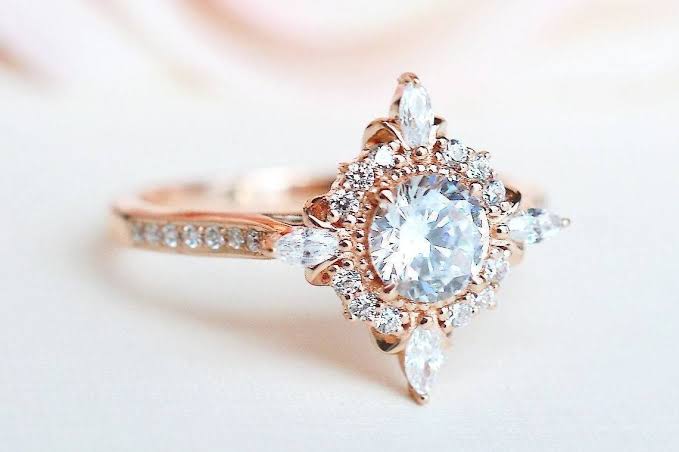
A quiet shift has been happening in engagement ring shopping over the past several years. More couples are stepping away from standard modern solitaires and instead choosing something with real history behind it. Art Deco engagement rings sit at the center of that shift, offering a combination of bold design, proven craftsmanship, and genuine individuality that mass produced modern rings often struggle to match.
Part of the appeal comes down to timing. Couples today are getting engaged later in life, often with more developed personal style and a clearer sense of what feels authentic to them rather than simply what is trending on social media. Art Deco design, with its confident geometric symmetry and striking use of contrasting gemstones, appeals to buyers who want a ring that feels intentional rather than generic. Where a modern round brilliant solitaire can look nearly identical across dozens of retailers, an Art Deco piece carries the specific design language of its era, immediately setting it apart.
Craftsmanship is another major draw. Rings from this period, roughly the 1920s through the mid 1930s, were frequently built using platinum, a metal favored at the time for its strength and its ability to support delicate filigree without added bulk. That filigree work, along with milgrain edging and precisely mirrored side details, was largely done by hand, giving each ring subtle variations that mass production simply cannot replicate today. For couples who want their ring to feel like a genuine object rather than a manufactured product, that handmade quality carries real emotional weight.
There is also a growing sustainability consideration influencing this shift. Choosing an authenticated antique ring means no new mining or manufacturing is required, an increasingly important factor for couples who care about the environmental and ethical implications of their purchases. An Art Deco ring that has already existed for roughly a century arrives with essentially no new environmental footprint, all while still delivering exceptional design and materials.
Budget considerations play a role as well, though not always in the direction people expect. While exceptional, rare pieces can command significant prices, many authenticated Art Deco rings offer comparable or even superior craftsmanship to new rings at a similar price point, particularly when factoring in the labor-intensive hand engraving and detailing involved in their original production. For couples trying to balance meaningful design with a defined budget, this can make antique pieces a surprisingly practical option rather than simply a luxury indulgence.
Perhaps most importantly, an authenticated Art Deco ring carries a built-in story. Every piece has already existed through decades of history before reaching a new couple, adding a layer of meaning that a newly manufactured ring cannot replicate no matter how well made. For many couples, knowing their ring has already witnessed nearly a century of life before becoming part of their own story is part of what makes the choice feel right.
Of course, this shift toward antique styles does require buyers to be more careful shoppers. Authenticity, proper documentation, and an understanding of a piece’s condition all matter significantly more when purchasing something with genuine age behind it. Working with a specialist who can speak confidently to a ring’s history, materials, and craftsmanship helps ensure buyers are getting exactly what they expect.
As more couples prioritize individuality, sustainability, and genuine craftsmanship over simply following trends, it is easy to see why Art Deco engagement rings continue gaining momentum rather than fading as a passing preference. For those ready to explore an authenticated collection built around exactly these values, Gesner Estate Jewelry offers a curated selection backed by the documentation and expertise today’s couples are looking for.
