



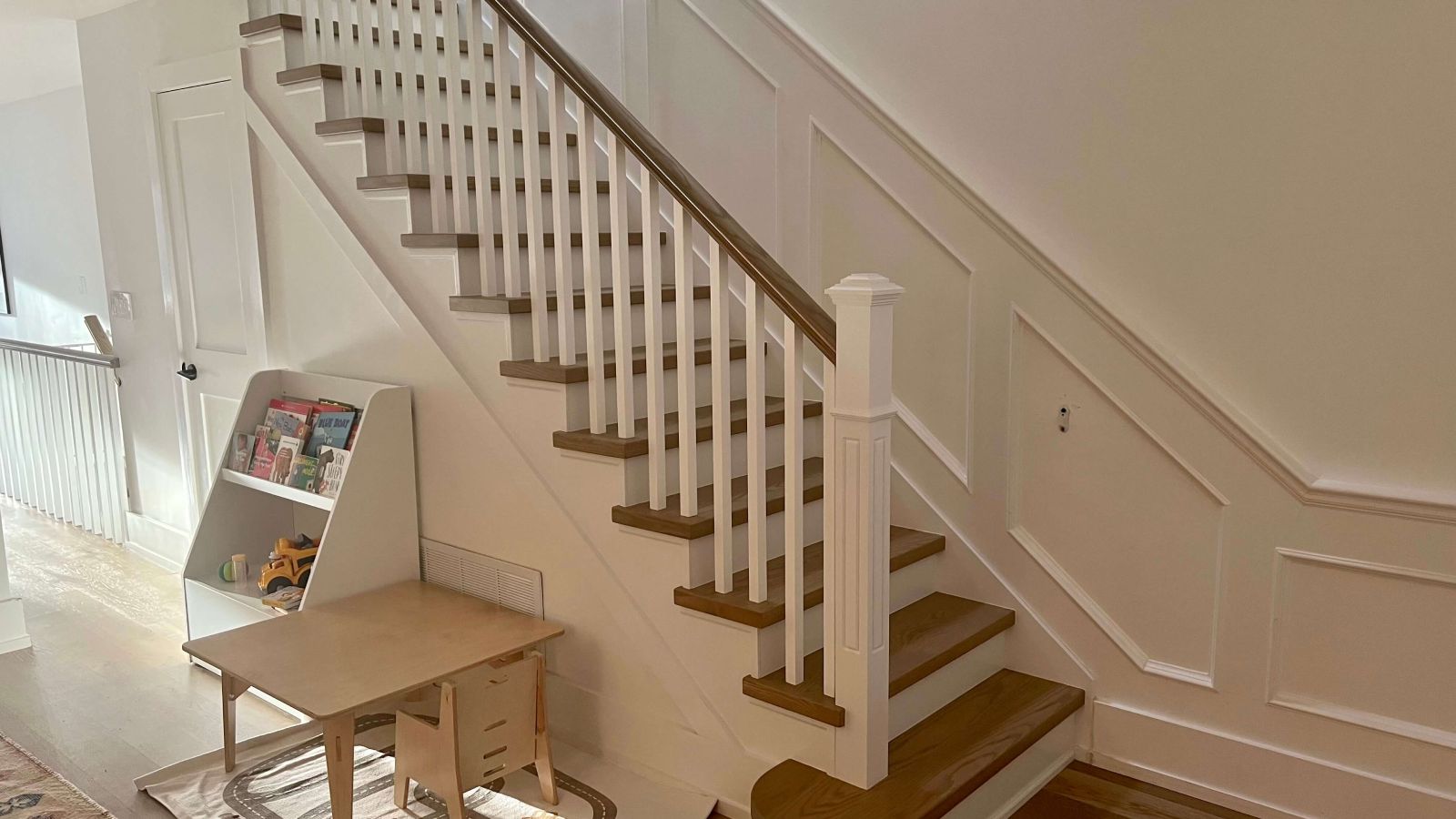
Material selection can determine whether a staircase renovation feels connected to the rest of a home or looks like a separate addition. For projects with traditional hardwood floors, red oak stair treads offer familiar grain, broad stain compatibility, and several installation options. These qualities make red oak worth considering for flooring dealers, remodelers, builders, stair installers, architects, and designers planning residential projects.
A Familiar Hardwood With Visible Character
Red oak has been widely used for flooring, stairs, cabinets, and interior millwork across the United States. Its open grain and coarse texture give it a recognizable appearance that works particularly well in traditional, transitional, farmhouse, and craftsman-style interiors.
The heartwood commonly carries pinkish or reddish-brown tones, while the sapwood can range from nearly white to light brown. These natural variations create movement across the staircase rather than a flat, uniform surface.
That grain character is also useful when stairs must coordinate with an older hardwood floor. Many existing homes contain red oak flooring, making the species a logical starting point for a staircase renovation.
Red Oak Accepts a Broad Range of Stains
One reason contractors and finishers continue to work with red oak is its ability to accept many stain colors. Natural and honey-toned finishes bring attention to its warm character, while medium and dark brown stains provide a more formal appearance.
The species can also support some cooler stain colors, although its warm undertones must be considered. A gray stain applied to red oak may retain more warmth than the same stain applied to white oak. This does not make the result unsuitable, but it reinforces the need for physical samples.
Testing the selected stain on the actual wood is especially important when matching an existing floor. Age, sunlight, previous coatings, and cleaning methods can all alter the appearance of installed hardwood.
Matching Stairs With Existing Flooring
A staircase does not always need to match the floor board for board. It should, however, relate to the flooring through species, color, grain, or finish sheen.
Begin by determining whether the existing floor is red oak. If the species is unknown, a flooring professional may be able to identify it from the grain and pore structure. Once the species is confirmed, compare several sections of the floor because color can vary across the room.
Finish sheen also matters. A high-gloss tread placed next to a matte floor can appear mismatched even when the stain colors are close. Samples should be reviewed under the lighting conditions found in the home, including daylight and evening lighting.
When an exact match is not possible, intentional contrast may produce a better result than an almost-correct color. Darker treads with painted risers, for example, can create a clear design relationship without pretending to be identical to the floor.
Retro or Traditional Stair Treads?
The condition and construction of the staircase will determine which tread profile is appropriate. Retro treads are designed to cover structurally sound existing steps. They are commonly used when carpet is removed and the homeowner wants a hardwood surface without rebuilding the staircase.
Traditional treads are full-thickness components used for new construction or complete tread replacement. They may be required when the existing steps are damaged, uneven, or unsuitable as a base for an overlay.
Contractors should inspect the staircase before recommending either option. Squeaks, movement, damaged framing, inconsistent riser heights, and loose components should be addressed before new wood is installed.
Prefinished or Unfinished?
Prefinished treads arrive with the stain and protective coating already applied. This can reduce sanding, staining, drying time, dust, and odor at the project site. It may be a good fit for occupied homes, shorter renovation schedules, or projects where consistent color is important.
Unfinished treads allow the installer or finisher to apply stain after fitting the components. This option may be preferable when the stairs and floors are being finished together or when the project requires a custom color.
The right choice depends on site conditions, scheduling, available labor, and the required match. Contractors should also account for the time needed to protect newly finished stairs before normal household traffic resumes.
Choose the Correct Return Configuration
A closed or box tread is used when walls or skirt boards enclose both sides of the staircase. When one side is exposed, the tread generally needs a finished return edge. Depending on the layout, this may be a left return, right return, or double return.
Return direction should be confirmed using the supplier’s stated viewing position. A simple drawing or photograph can prevent confusion. For staircases with mixed configurations, prepare a numbered schedule that identifies the profile and dimensions of every step.
Measure Each Step Separately
Older stairs are rarely identical from top to bottom. Walls may not be square, tread widths can vary, and the distance between skirt boards may change along the flight.
Measure every step at the front and back. Record tread depth, finished width, nosing requirements, riser height, and landing transitions. Wider stairs, pie-shaped steps, and landings may require specially sized components.
The quantity should also include an appropriate allowance for job-site cutting or unexpected defects. Confirm material availability and production times before setting the installation date.
Plan the Entire Staircase as One System
Treads are only one part of the finished staircase. Risers, landing materials, skirt boards, handrails, newel posts, balusters, and trim should be considered during the initial material selection.
A coordinated plan helps the project team avoid last-minute choices that conflict with the flooring or architectural style. It also gives the installer a clearer picture of transitions, exposed edges, and finishing requirements.
For solid hardwood tread profiles, prefinished and unfinished choices, samples, and project support, visit Wood Stair Co and begin selecting the right components for your next staircase renovation.
